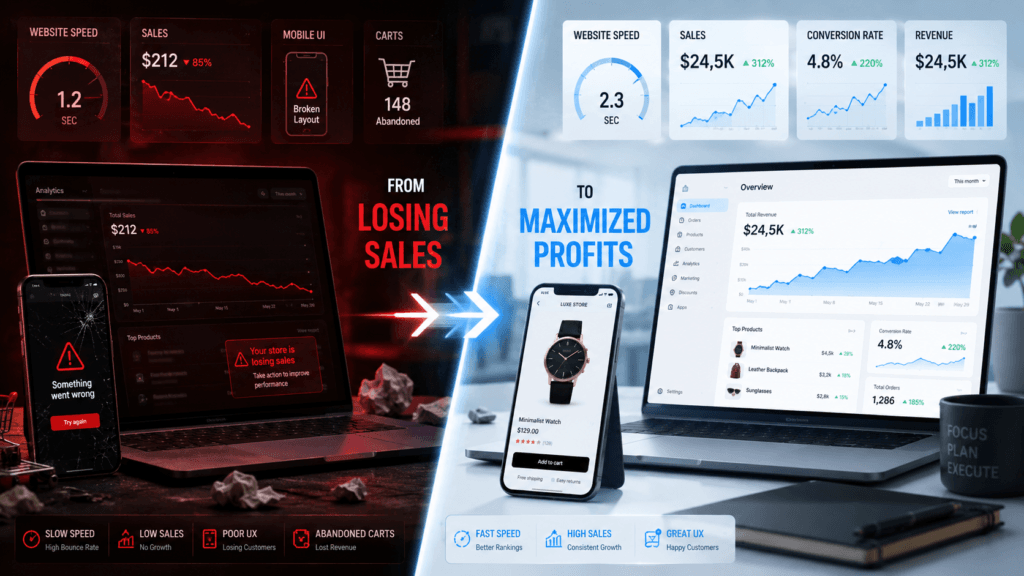


Why Most Ecommerce Websites Fail in 2026 — And How Smart Brands Are Scaling Faster

Orbitwebx
May 24, 2026
0 Comments

Why Most Ecommerce Websites Fail in 2026 — And How Smart Brands Are Scaling Faster

The ecommerce industry is growing faster than ever.

Every day, thousands of new online stores launch with the dream of generating massive sales, building a loyal customer base, and creating a recognizable brand.

But here’s the reality most businesses don’t want to hear:

Most ecommerce websites fail within the first few years.

Not because the products are bad. Not because the market is too competitive. Not because advertising doesn’t work.

They fail because their website experience is broken.

Modern customers have become smarter, faster, and more demanding.

If your store takes too long to load, looks outdated, feels confusing, or lacks trust — users leave instantly.

And once they leave, most never come back.

In 2026, success in ecommerce is no longer about simply having a website.

It’s about creating a conversion-focused digital ecosystem designed for:

  • Speed
  • Trust
  • Branding
  • User psychology
  • Mobile-first experiences
  • Conversion optimization
  • Customer retention

The brands scaling rapidly today understand one important thing:

Your website is no longer just a store.

It is your most powerful sales machine.


The Biggest Reasons Ecommerce Websites Fail

1. Slow Website Performance

One of the biggest reasons ecommerce businesses lose sales is poor website speed.

Modern users expect websites to load almost instantly.

If your website takes more than a few seconds to load, users begin leaving before even seeing your products.

Common Speed Issues

  • Heavy images
  • Poor hosting
  • Too many apps/plugins
  • Unoptimized code
  • Weak mobile performance
  • Excessive animations

Impact of Slow Websites

ProblemBusiness Impact
Slow loading pagesHigher bounce rates
Poor mobile speedLower conversions
Laggy product pagesReduced trust
Heavy scriptsSEO ranking drops
Delayed checkoutCart abandonment

Smart Brands Focus On

  • Lightweight development
  • Optimized media
  • Core Web Vitals
  • Mobile-first performance
  • Clean coding structure
  • Fast checkout systems

2. Weak First Impressions

Visitors decide within seconds whether they trust your brand.

If your website looks outdated or unprofessional, customers automatically assume your products and services are low quality.

Common Design Mistakes

  • Cluttered layouts
  • Poor typography
  • Inconsistent branding
  • Generic visuals
  • Bad color combinations
  • Weak CTA buttons
  • Too much information

What High-Converting Brands Do Differently

  • Use premium layouts
  • Focus on clean spacing
  • Build strong visual hierarchy
  • Create emotional branding
  • Use modern UI/UX principles
  • Highlight products clearly
  • Simplify customer journeys

3. No Clear Brand Identity

Many ecommerce businesses look exactly the same.

They use generic themes, stock visuals, weak messaging, and copy-paste branding.

Customers remember brands that create a unique identity.

Strong Brands Focus On

  • Consistent visual language
  • Premium brand storytelling
  • Emotional marketing
  • Strong typography
  • Distinctive product presentation
  • Memorable website experience

Example

A customer may forget a product.

But they remember:

  • How your brand made them feel
  • How smooth the experience was
  • How premium the website looked
  • How easy the checkout process felt

4. Poor Mobile Experience

In 2026, mobile traffic dominates ecommerce.

Yet many websites are still designed primarily for desktop users.

This creates massive usability issues.

Common Mobile Problems

  • Small buttons
  • Broken layouts
  • Slow loading images
  • Difficult navigation
  • Poor product visibility
  • Complicated checkout forms

Mobile Optimization Checklist

  • Responsive layouts
  • Sticky CTA buttons
  • Fast mobile speed
  • Thumb-friendly navigation
  • Simplified checkout
  • Optimized product images
  • Mobile-first UI design

5. Weak Product Presentation

Customers cannot physically touch products online.

Your product presentation becomes your digital salesperson.

Weak product pages kill conversions.

Essential Product Page Elements

High-Converting ElementsWhy It Matters
Premium product imagesBuilds trust
Lifestyle visualsCreates emotional connection
Clear descriptionsReduces confusion
Reviews & ratingsIncreases credibility
Fast shipping informationReduces hesitation
Strong CTA buttonsImproves conversion rate
FAQ sectionsRemoves objections

6. Complicated Checkout Process

Every extra step in checkout reduces conversions.

Modern users want speed and simplicity.

Reasons Customers Abandon Checkout

  • Forced account creation
  • Hidden shipping costs
  • Slow payment processing
  • Too many form fields
  • Lack of payment options
  • Poor trust signals

Smart Brands Simplify Checkout

They focus on:

  • One-page checkout
  • Guest checkout
  • Faster payment gateways
  • Mobile optimization
  • Trust badges
  • Transparent pricing

7. Lack of Trust Signals

Trust is one of the most powerful conversion factors in ecommerce.

If users do not trust your website, they will never complete a purchase.

Important Trust Elements

  • Customer reviews
  • Secure payment badges
  • Real testimonials
  • Professional branding
  • Transparent policies
  • Social proof
  • High-quality visuals
  • Fast customer support

Trust = Higher Revenue

Customers buy faster when they feel safe.

The best ecommerce brands understand that trust directly impacts sales performance.


What Smart Ecommerce Brands Are Doing in 2026

The brands scaling rapidly today are investing heavily into:

Conversion-Focused Design

Every section is designed strategically.

Nothing is random.

Layouts, colors, spacing, typography, and buttons are optimized for conversion psychology.


Data-Driven Optimization

Modern brands continuously analyze:

  • User behavior
  • Heatmaps
  • Conversion funnels
  • Bounce rates
  • Mobile performance
  • Checkout drop-offs

They improve based on data — not assumptions.


Personalized Experiences

Customers now expect personalized experiences.

Brands use:

  • Dynamic recommendations
  • Personalized offers
  • Smart upselling
  • Customer segmentation
  • AI-powered experiences

Premium Branding

The most successful brands look premium.

Even small ecommerce businesses are now competing using:

  • Luxury-style design
  • High-quality visuals
  • Strong storytelling
  • Emotional branding
  • Modern interfaces

Ecommerce Success Framework for 2026

Step 1 — Build a Strong Brand Foundation

Your website should communicate:

  • Trust
  • Quality
  • Professionalism
  • Simplicity
  • Brand authority

Step 2 — Optimize Performance

Focus heavily on:

  • Website speed
  • Mobile optimization
  • Lightweight development
  • Image compression
  • Clean coding structure

Step 3 — Improve User Experience

Create smooth customer journeys.

Remove confusion.

Make navigation effortless.


Step 4 — Increase Conversion Rates

Optimize:

  • CTA placement
  • Product pages
  • Checkout flow
  • Social proof
  • Trust signals

Step 5 — Scale with Data

Use analytics and customer insights to improve continuously.

Winning brands evolve constantly.


Key Takeaways

Ecommerce websites fail because they focus only on products.

Winning brands focus on the complete customer experience.

The future of ecommerce belongs to brands that combine:

  • High-performance websites
  • Modern UI/UX
  • Conversion optimization
  • Strong branding
  • Mobile-first design
  • Fast loading speed
  • Customer psychology

In 2026, your website is either helping your business grow — or silently killing your conversions.

The difference between struggling brands and scaling brands often comes down to one thing:

Experience.


Final Conclusion

The ecommerce industry is becoming more competitive every year.

Customers have endless options.

If your website fails to impress users instantly, they move to competitors within seconds.

Modern ecommerce success requires more than attractive visuals.

It requires strategy.

It requires performance.

It requires conversion-focused thinking.

The brands dominating in 2026 understand that growth comes from building digital experiences customers actually enjoy using.

When you combine:

  • Modern design
  • Fast performance
  • Clear branding
  • Smart conversion strategy
  • Mobile optimization
  • Trust-building experiences

You create a website that doesn’t just look good.
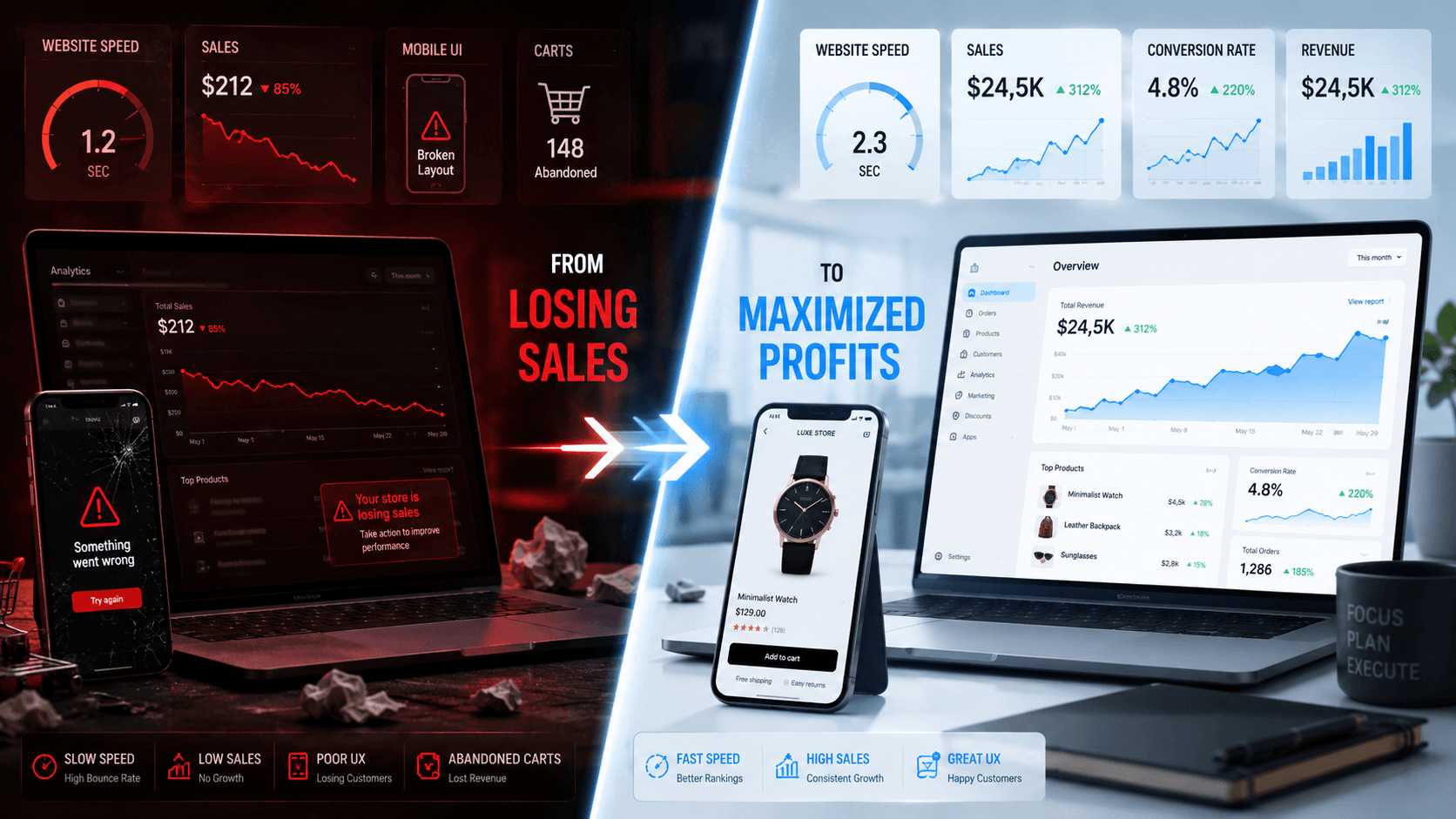
You create a website that sells.

Frequently Asked Questions

Common Questions About This Topic

Find quick answers and helpful insights related to this topic.

What makes a high-converting ecommerce website?
A high-converting ecommerce website combines fast performance, premium branding, modern design, strong product presentation, and simplified customer journeys.
How can I improve ecommerce conversions?
You can improve conversions by optimizing website speed, simplifying checkout, improving UI/UX design, adding trust signals, and creating mobile-friendly experiences.
What makes a high-converting ecommerce website?
A high-converting ecommerce website combines fast performance, premium branding, modern design, strong product presentation, and simplified customer journeys.
Let’s Build Something Powerful

Ready to build a high-converting ecommerce website that actually grows your business?

Our team helps brands create modern, performance-focused, conversion-driven ecommerce experiences designed for real growth. Let’s transform your ecommerce vision into a scalable digital experience.

Why Most Ecommerce Websites Fail – And How Smart Brands Scale Faster

Orbitwebx
May 22, 2026
0 Comments

Why Most Ecommerce Websites Fail – And How Smart Brands Scale Faster

Introduction

The ecommerce industry is growing faster than ever, but the harsh reality is that most online stores fail within the first few years. Many business owners believe launching a website is enough to generate sales, but modern ecommerce success requires far more than just uploading products online.

From poor website performance and weak branding to slow loading speed and low conversion optimization, many ecommerce businesses struggle because they ignore the technical and strategic foundation required to scale successfully.

Smart brands approach ecommerce differently. They focus on customer experience, mobile optimization, page speed, trust-building, and conversion-driven design. Instead of simply creating a website, they build a scalable digital ecosystem designed for long-term growth.

In this blog, we’ll explore the biggest reasons ecommerce websites fail and how successful brands use smarter strategies to scale faster and dominate the online market.


The Biggest Reasons Ecommerce Websites Fail

1. Poor Website Design Creates Low Trust

Your website is your digital storefront. If it looks outdated, cluttered, or unprofessional, visitors leave within seconds.

Many ecommerce businesses use generic templates without considering:

  • User experience
  • Mobile responsiveness
  • Product presentation
  • Navigation structure
  • Brand identity

Customers judge trust instantly. A poorly designed store reduces credibility and directly impacts sales.

Smart Brands Do This Instead:

Successful brands invest in:

  • Premium UI/UX design
  • Clean layouts
  • Conversion-focused landing pages
  • Professional branding
  • High-quality product visuals

Platforms like Shopify, WordPress, WooCommerce, and BigCommerce become powerful when combined with strategic design and optimization.


2. Slow Website Speed Kills Sales

Website speed is one of the most important ranking and conversion factors.

Studies consistently show that users leave websites if pages take more than a few seconds to load. Slow speed affects:

  • SEO rankings
  • User experience
  • Cart conversions
  • Bounce rates
  • Mobile usability

Common Speed Problems:

  • Unoptimized images
  • Heavy themes
  • Poor hosting
  • Too many plugins
  • Unoptimized code
  • No caching setup

Smart Brands Focus On:

  • Core Web Vitals optimization
  • Lightweight design systems
  • CDN integration
  • Image compression
  • Mobile-first performance
  • Advanced caching

A fast ecommerce website not only improves SEO but also significantly increases revenue.


3. Weak Mobile Experience

More than half of ecommerce traffic now comes from mobile devices, yet many stores are still built primarily for desktop users.

Common mobile issues include:

  • Broken layouts
  • Tiny buttons
  • Slow mobile speed
  • Difficult checkout process
  • Poor navigation

Smart Brands Prioritize:

  • Mobile-first design
  • Responsive product pages
  • Fast-loading mobile layouts
  • Sticky add-to-cart functionality
  • Optimized mobile checkout

A smooth mobile experience directly improves conversions and customer retention.


4. No Conversion Optimization Strategy

Traffic alone does not generate sales. Many ecommerce businesses spend money on ads but fail to optimize conversion funnels.

Without conversion optimization, stores lose potential customers every day.

Common Conversion Mistakes:

  • Weak product pages
  • Poor CTA buttons
  • Complicated checkout
  • Lack of trust signals
  • No urgency elements
  • Low-quality product descriptions

Smart Brands Use:

  • A/B testing
  • High-converting product layouts
  • Strategic CTA placement
  • Social proof
  • Customer reviews
  • Upsell and cross-sell systems

Scaling ecommerce requires maximizing every visitor’s value.


5. Bad SEO Structure

Many ecommerce websites fail because they are invisible on search engines.

Poor SEO setup includes:

  • Missing meta titles
  • Duplicate content
  • Weak keyword targeting
  • Slow indexing
  • Poor URL structure
  • Thin product descriptions

Smart Brands Invest In:

  • Technical SEO
  • Optimized category pages
  • SEO-focused blog content
  • Internal linking
  • Schema markup
  • Keyword strategy

Organic traffic becomes one of the most powerful long-term growth channels for ecommerce brands.


How Smart Ecommerce Brands Scale Faster

1. They Build Scalable Platforms

Successful brands choose scalable ecommerce platforms based on business goals.

Popular Scalable Platforms:

  • Shopify for fast-growing ecommerce brands
  • WooCommerce for flexible WordPress-based stores
  • BigCommerce for enterprise-level ecommerce
  • WordPress for content-driven business growth

The right platform improves flexibility, integrations, and long-term scalability.


2. They Invest In Branding

Modern ecommerce success is driven by branding, not just products.

Strong brands focus on:

  • Visual identity
  • Premium user experience
  • Consistent messaging
  • Trust and authority
  • Emotional customer connection

People remember brands that create experiences, not just stores.


3. They Optimize Every Stage Of The Customer Journey

Scaling brands carefully optimize:

  • Homepage experience
  • Product pages
  • Checkout process
  • Email marketing
  • Retargeting funnels
  • Customer support

Every touchpoint affects customer retention and lifetime value.


4. They Use High-Converting Landing Pages

Landing pages are essential for:

  • Paid ads
  • Product launches
  • Lead generation
  • Seasonal campaigns

Smart brands use dedicated landing pages instead of sending traffic to generic pages.

High-converting landing pages include:

  • Strong headlines
  • Clear CTA sections
  • Trust indicators
  • Fast loading speed
  • Conversion-focused layouts

5. They Continuously Improve Performance

Successful ecommerce businesses constantly analyze:

  • Heatmaps
  • User behavior
  • Conversion data
  • SEO rankings
  • Website speed
  • Cart abandonment

Continuous optimization creates sustainable long-term growth.


Why Professional Ecommerce Development Matters

Building a successful ecommerce business requires more than installing a theme.

Professional ecommerce development helps businesses:

  • Improve conversions
  • Increase SEO performance
  • Optimize speed
  • Create premium branding
  • Scale efficiently
  • Improve customer experience

At Orbitwebx, we help businesses build high-performance ecommerce websites designed for growth using:

  • Shopify Development
  • WordPress Development
  • WooCommerce Development
  • BigCommerce Solutions
  • Landing Page Design
  • Page Speed Optimization
  • Ecommerce SEO Optimization

Final Thoughts

Most ecommerce websites fail because they focus only on launching instead of optimizing.

Smart brands understand that ecommerce growth depends on:

  • User experience
  • Speed optimization
  • Mobile performance
  • SEO strategy
  • Conversion optimization
  • Professional branding

The ecommerce industry is highly competitive, but businesses that invest in scalable systems and premium customer experiences position themselves for long-term success.

If you want to build a high-converting ecommerce website that scales faster, working with the right ecommerce development partner can make all the difference.

Let’s Build Something Powerful

Ready to build a high-converting ecommerce website that actually grows your business?

Our team helps brands create modern, performance-focused, conversion-driven ecommerce experiences designed for real growth. Let’s transform your ecommerce vision into a scalable digital experience.