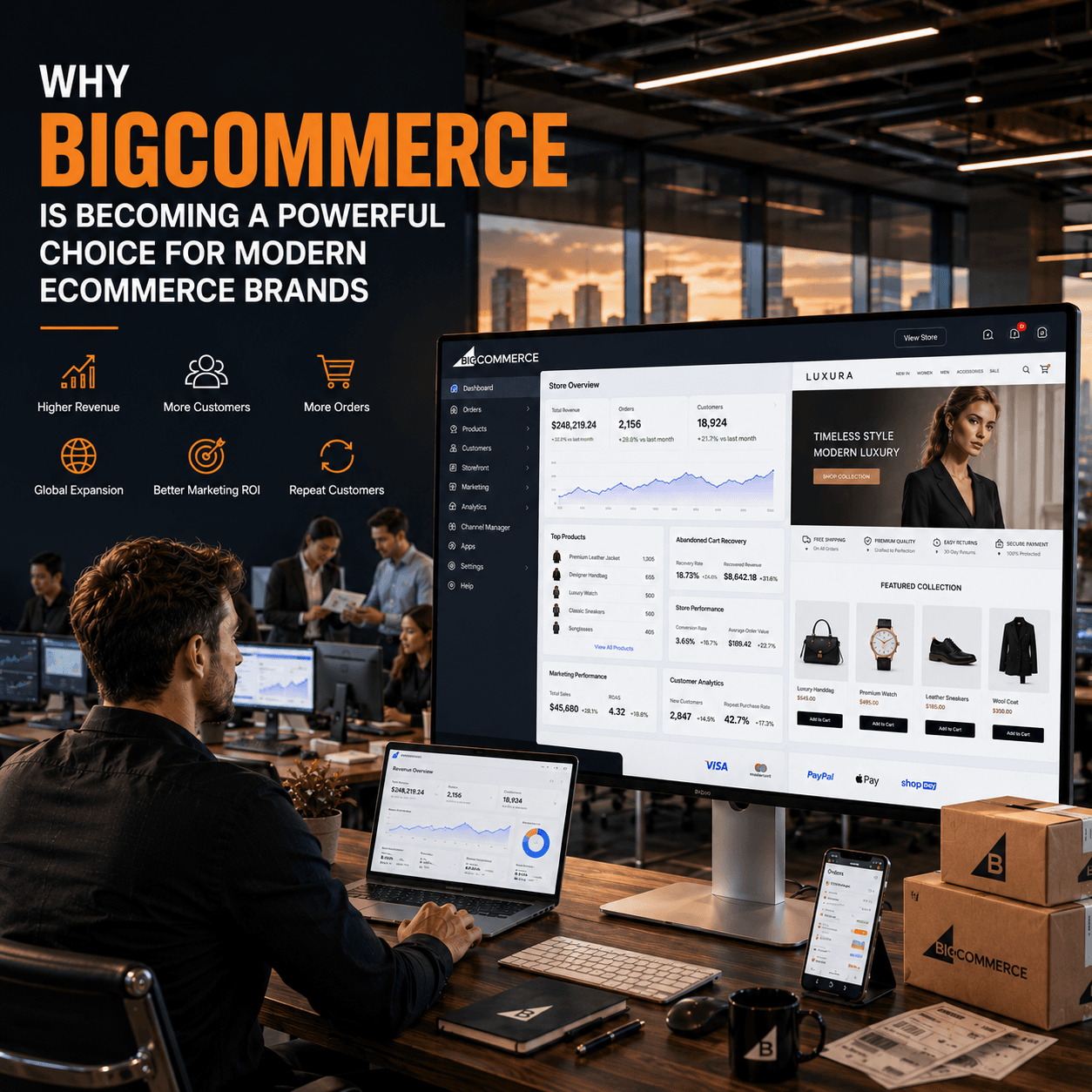
Why BigCommerce Is Becoming a Powerful Choice for Modern Ecommerce Brands
The Rise of Modern Ecommerce Platforms
The ecommerce industry is evolving rapidly, and businesses now need platforms that offer scalability, flexibility, performance, and seamless customer experiences.
In 2026, brands are looking beyond traditional ecommerce solutions and choosing platforms that can support long-term growth.
One platform gaining significant attention is BigCommerce.
BigCommerce has become a strong choice for businesses that want powerful ecommerce functionality without the complexity of managing heavy backend systems.
What Makes BigCommerce Different?
BigCommerce is a cloud-based ecommerce platform designed to help businesses build, manage, and scale online stores efficiently.
Unlike many traditional ecommerce systems, BigCommerce provides:
Built-in ecommerce features
Scalable infrastructure
SEO-friendly architecture
Flexible customization options
Multi-channel selling support
Enterprise-level performance
Headless commerce capabilities
This makes it suitable for startups, growing brands, and large-scale ecommerce businesses.
Why Businesses Are Switching to BigCommerce
Business Challenge
How BigCommerce Helps
Slow website performance
Optimized cloud infrastructure
Limited scalability
Enterprise-ready architecture
Complex backend management
Easy-to-manage admin system
Poor SEO structure
SEO-friendly platform setup
Multi-channel selling issues
Integrated selling across platforms
Mobile shopping problems
Responsive ecommerce experiences
Customization limitations
Flexible frontend development options
BigCommerce Offers Strong Performance
Website speed and performance are critical for ecommerce success.
Modern shoppers expect:
Fast product loading
Smooth browsing
Quick checkout experiences
Mobile optimization
Reliable website uptime
BigCommerce provides cloud-hosted infrastructure that helps brands maintain strong performance even during high-traffic sales periods.
This helps improve:
Customer experience
Search engine rankings
Conversion rates
Customer retention
SEO Advantages of BigCommerce
Search engine optimization is essential for ecommerce growth.
BigCommerce includes several SEO-friendly features that help businesses improve online visibility.
Built-In SEO Features Include:
Custom URL structures
Optimized page speed
Mobile-friendly layouts
Editable metadata
Automatic sitemap generation
Structured data support
Clean website architecture
These features help ecommerce stores rank better in search engines and attract organic traffic.
Headless Commerce Is Growing Rapidly
One of the biggest reasons modern brands are choosing BigCommerce is its support for headless commerce.
Headless commerce allows businesses to separate the frontend design from the backend ecommerce system.
This gives brands greater flexibility to create:
Custom shopping experiences
Modern UI/UX designs
Faster frontend performance
Omnichannel experiences
Advanced mobile applications
As digital commerce evolves, headless architecture is becoming increasingly important for growing brands.
BigCommerce Supports Multi-Channel Selling
Modern businesses sell products across multiple platforms, not just their website.
BigCommerce supports integration with:
Amazon
Instagram
Facebook
Google Shopping
TikTok
Marketplace platforms
This allows brands to manage products, inventory, and orders more efficiently from a centralized system.
Benefits of BigCommerce for Growing Brands
Feature
Business Benefit
Cloud Hosting
Reliable and scalable performance
SEO Optimization
Better search visibility
Headless Commerce
Advanced frontend flexibility
API Support
Easy third-party integrations
Responsive Design
Better mobile shopping experience
Security Features
Improved customer trust
Multi-Channel Selling
Expanded sales opportunities
Why User Experience Matters in Ecommerce
Modern ecommerce success depends heavily on user experience.
Customers expect:
Simple navigation
Fast product discovery
Premium product pages
Smooth checkout systems
Mobile-friendly browsing
Secure payment experiences
BigCommerce allows developers and brands to create optimized shopping experiences that improve engagement and conversions.
Is BigCommerce Right for Your Business?
BigCommerce is an excellent option for:
Growing ecommerce startups
Mid-sized online brands
Enterprise ecommerce businesses
B2B ecommerce companies
Multi-channel sellers
Brands requiring scalability
Businesses looking for flexibility, performance, and long-term ecommerce growth often find BigCommerce to be a strong platform choice.
Final Thoughts
The ecommerce industry is becoming more competitive every year, and businesses need platforms that can support modern digital commerce demands.
BigCommerce offers powerful ecommerce capabilities, scalable performance, advanced flexibility, and modern shopping experiences that help brands grow faster online.
At Orbiton, we help businesses build high-performing ecommerce websites with modern UI/UX, optimized performance, and conversion-focused development strategies.
As ecommerce continues evolving in 2026, BigCommerce is becoming one of the strongest platforms for businesses that want scalable and future-ready online stores.
Let’s Build Something Powerful
Ready to build a high-converting ecommerce website that actually grows your business?
Our team helps brands create modern, performance-focused,
conversion-driven ecommerce experiences designed for real growth.
Let’s transform your ecommerce vision into a scalable digital experience.
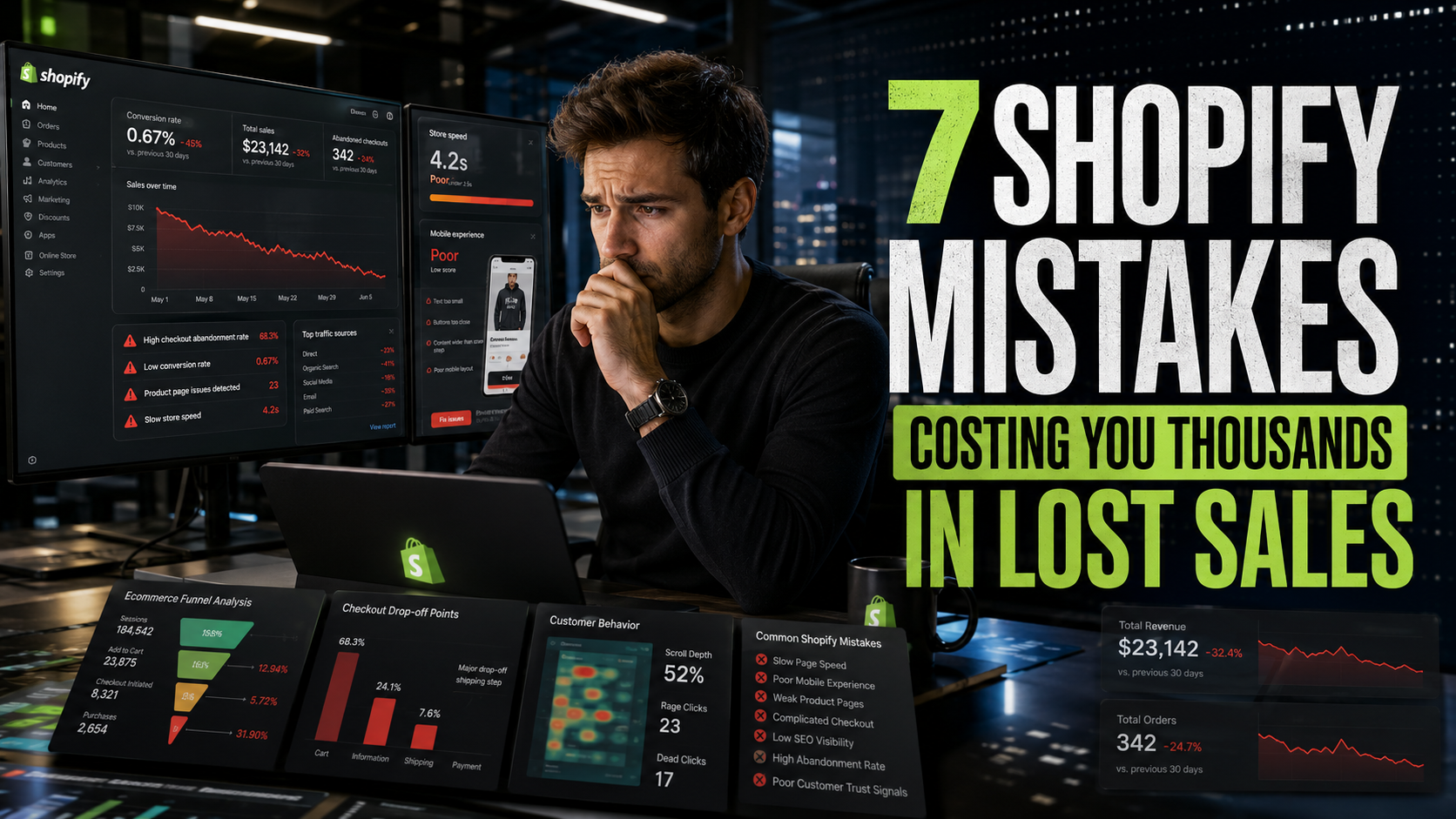
7 Shopify Mistakes That Cost Ecommerce Brands Thousands in Sales
Shopify has become one of the most trusted ecommerce platforms for businesses looking to sell products online. Its flexibility, ease of use, and extensive ecosystem make it an excellent choice for startups, growing brands, and established businesses alike.
However, launching a Shopify store is only the first step. Many ecommerce businesses struggle to generate consistent sales not because of their products, but because of avoidable mistakes within their website. Poor user experience, slow performance, weak product pages, and ineffective optimization can significantly impact customer trust and purchasing decisions.
Even stores receiving thousands of visitors every month can lose valuable revenue if key areas of the customer journey are overlooked. The good news is that most of these mistakes can be identified and corrected with the right strategy.
In this article, we’ll explore seven common Shopify mistakes that cost ecommerce brands thousands in lost sales and explain how to avoid them.
Why Shopify Store Optimization Matters
Your Shopify store serves as the digital storefront of your business. Every visitor forms an impression within seconds of landing on your website. If the experience feels slow, confusing, or untrustworthy, potential customers may leave before exploring your products.
Successful ecommerce stores focus on delivering a seamless experience that encourages visitors to browse, engage, and purchase confidently. Store optimization affects every aspect of business performance, including customer retention, conversion rates, average order value, and search engine visibility.
Businesses that continuously optimize their Shopify stores often achieve stronger growth, improved customer satisfaction, and higher profitability compared to competitors who neglect ongoing improvements.
Shopify Performance Factors
Optimization Area
Business Impact
Website Speed
Higher Conversions
Mobile Experience
Better User Engagement
Product Pages
Increased Sales
SEO Optimization
More Organic Traffic
Checkout Process
Lower Cart Abandonment
Trust Signals
Improved Customer Confidence
Analytics Tracking
Smarter Business Decisions
Mistake #1: Slow Website Speed
Website speed directly influences user experience and sales performance. Modern consumers expect websites to load quickly, and even a slight delay can negatively impact engagement.
Research consistently shows that visitors are more likely to leave a website if pages take too long to load. Slow-loading stores create frustration and reduce the likelihood of completing a purchase.
Common causes of slow Shopify websites include oversized images, excessive third-party apps, poorly optimized themes, unnecessary scripts, and large video files.
Improving store speed should be a top priority for every ecommerce business. Compressing images, removing unused applications, optimizing code, and choosing a lightweight theme can significantly improve performance.
A faster website not only improves customer satisfaction but also contributes to better search engine rankings and higher conversion rates.
Mistake #2: Ignoring Mobile Users
Mobile commerce continues to dominate online shopping behavior. A significant percentage of ecommerce traffic now comes from smartphones and tablets.
Despite this trend, many Shopify stores still provide a desktop-focused experience while neglecting mobile usability. Poor mobile navigation, difficult checkout processes, and slow-loading pages often result in lost sales.
Customers expect a smooth and effortless experience regardless of the device they use. Mobile visitors should be able to browse products, view images, add items to their cart, and complete purchases without obstacles.
Optimizing your Shopify store for mobile devices involves responsive design, fast page loading speeds, simplified navigation, touch-friendly buttons, and streamlined checkout forms.
Brands that prioritize mobile optimization often experience higher engagement rates and stronger conversion performance.
Mistake #3: Weak Product Pages
Product pages play one of the most important roles in ecommerce success. They provide the information customers need to make purchasing decisions and build confidence in your products.
Many Shopify stores make the mistake of using generic descriptions, low-quality images, or limited product information. These shortcomings create uncertainty and reduce trust.
A high-converting product page should clearly communicate value, answer common customer questions, and showcase products from multiple angles. Detailed descriptions, professional photography, customer reviews, and transparent shipping information all contribute to stronger purchasing decisions.
Product Page Comparison
Weak Product Page
Optimized Product Page
Basic Description
Benefit-Focused Content
One Product Image
Multiple High-Quality Images
No Reviews
Verified Customer Reviews
Limited Information
Detailed Specifications
Generic CTA
Conversion-Focused CTA
The stronger your product pages, the easier it becomes for customers to feel confident about making a purchase.
Mistake #4: Neglecting Shopify SEO
Many ecommerce businesses rely heavily on paid advertising while overlooking the long-term benefits of search engine optimization.
Shopify SEO helps attract qualified visitors actively searching for products, solutions, and services related to your business. Unlike paid advertising, organic traffic can generate sustainable growth over time.
SEO involves optimizing product titles, category pages, URLs, meta descriptions, images, internal links, and content. Publishing valuable blog articles can also improve search visibility and establish authority within your industry.
Stores that invest in SEO often experience increased traffic, stronger brand awareness, and reduced dependence on advertising spend.
Ignoring SEO limits growth opportunities and makes it more difficult to compete in crowded markets.
Mistake #5: Complicated Checkout Processes
Many ecommerce brands lose customers during the final stage of the buying journey because their checkout process creates unnecessary friction.
Unexpected fees, lengthy forms, account creation requirements, and limited payment options can discourage customers from completing purchases.
A streamlined checkout experience should be simple, fast, and transparent. Customers should know exactly what they are paying, how long shipping will take, and what payment options are available.
Providing guest checkout, multiple payment methods, clear shipping information, and simplified forms can significantly reduce cart abandonment rates.
Small improvements to the checkout process often lead to substantial increases in revenue.
Mistake #6: Missing Trust Signals
Trust is one of the most important factors influencing online purchasing decisions. Customers want reassurance that they are buying from a legitimate and reliable business.
Many Shopify stores fail to display trust-building elements prominently throughout the shopping experience.
Customer reviews, testimonials, secure payment badges, refund policies, shipping information, and business contact details all contribute to customer confidence.
When visitors feel confident in your brand, they are more likely to complete purchases and return for future orders.
Essential Trust Elements
Trust Signal
Purpose
Customer Reviews
Builds Social Proof
Testimonials
Increases Credibility
SSL Security
Protects Customer Data
Refund Policy
Reduces Purchase Risk
Contact Information
Improves Transparency
Payment Security Badges
Builds Trust During Checkout
Trust-building should be integrated across every stage of the customer journey.
Mistake #7: Not Tracking Store Performance
One of the biggest mistakes ecommerce businesses make is operating without reliable data.
Without proper analytics, it becomes difficult to understand customer behavior, identify opportunities, or measure marketing effectiveness.
Tracking tools provide valuable insights into visitor activity, conversion rates, traffic sources, cart abandonment, and purchasing patterns.
Businesses that leverage analytics can make smarter decisions, improve marketing performance, and continuously optimize their stores based on real customer data.
Monitoring key metrics allows brands to identify issues before they impact revenue and discover opportunities for growth.
Important Ecommerce Metrics
Metric
Why It Matters
Conversion Rate
Measures Store Effectiveness
Bounce Rate
Indicates User Experience
Average Order Value
Impacts Revenue Growth
Cart Abandonment Rate
Reveals Checkout Issues
Traffic Sources
Evaluates Marketing Performance
Customer Lifetime Value
Measures Long-Term Profitability
Data-driven decision-making is one of the most effective ways to improve ecommerce performance.
How to Audit Your Shopify Store
Conducting regular store audits helps identify weaknesses before they impact customer experience and revenue.
Review website speed, mobile responsiveness, SEO performance, navigation, product pages, checkout flow, and analytics reporting. Small improvements across multiple areas often produce significant results over time.
Store optimization should not be viewed as a one-time project. The most successful ecommerce brands continuously test, refine, and improve their customer experience.
Regular audits help maintain competitiveness and ensure your Shopify store continues to perform at its highest potential.
Conclusion
Shopify provides a powerful foundation for ecommerce success, but achieving sustainable growth requires more than simply launching a store.
Slow performance, poor mobile experiences, weak product pages, neglected SEO, complicated checkout processes, missing trust signals, and insufficient analytics can all limit business growth and reduce revenue.
The most successful ecommerce brands understand that optimization is an ongoing process. By identifying and correcting these common mistakes, businesses can improve customer experience, increase conversion rates, strengthen search visibility, and maximize long-term profitability.
Investing in Shopify optimization today can create meaningful improvements in sales performance and help position your brand for continued success in the competitive ecommerce landscape.
Frequently Asked Questions
What is the most common Shopify mistake?
The most common Shopify mistake is neglecting website performance and user experience. Slow loading times and poor navigation often result in lost sales and higher bounce rates.
How can I increase conversions on my Shopify store?
Is Shopify SEO important for ecommerce businesses?
Yes. Shopify SEO helps attract organic traffic, improve search rankings, increase visibility, and reduce reliance on paid advertising.
How often should I optimize my Shopify store?
Store performance should be reviewed regularly. Monthly audits and ongoing optimization efforts help maintain strong performance and support long-term growth.
Why is mobile optimization important for Shopify stores?
Most ecommerce shoppers browse and purchase products on mobile devices. A mobile-friendly experience improves engagement, customer satisfaction, and conversion rates.
Let’s Build Something Powerful
Ready to build a high-converting ecommerce website that actually grows your business?
Our team helps brands create modern, performance-focused,
conversion-driven ecommerce experiences designed for real growth.
Let’s transform your ecommerce vision into a scalable digital experience.